The Art of the Almost Plate: Fine Dining's Quiet War Against the Concept of Enough Food
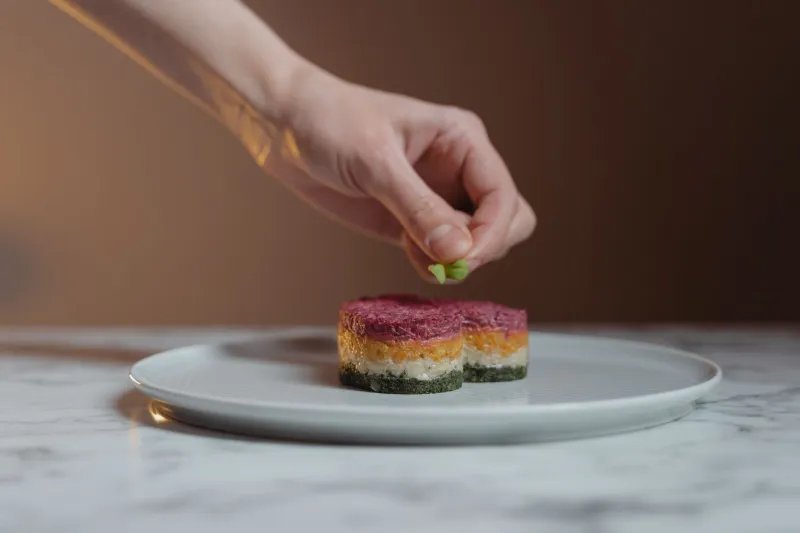
The plate arrives. It is large — genuinely, impressively large, the kind of wide, flat, white ceramic surface that communicates seriousness and artistic intent. You look at it with the appropriate level of anticipation. And then, somewhere near the center, you notice the food.
It is small.
Not small in the charming, delicate way of a well-composed bite. Small in the way that suggests the kitchen may have made a clerical error. Three thin slices of something draped over a smear of something else, with a small arrangement of microgreens that appears to have been placed there by someone using tweezers and a level of concentration usually reserved for neurosurgery. The plate is mostly white. The food is mostly theoretical.
You are going to need to stop for fast food on the way home. You already know this. The question is whether you can afford to, given what you just paid for dinner.
The Philosophy of Negative Space (Or: How to Charge $38 for a Very Small Amount of Fish)
Fine dining has a ready explanation for this, and it is sophisticated enough that you'll feel slightly uncultured for questioning it. The explanation is negative space — a concept borrowed from visual art that describes the empty area around and between the subjects of an image. In painting and photography, negative space is a legitimate compositional tool that creates balance, draws attention to focal points, and gives the eye somewhere to rest.
On a dinner plate, negative space is also those things. It is also, not coincidentally, a way to serve a smaller portion while making it feel intentional rather than stingy.
The logic, as delivered by approximately every fine dining establishment in America, goes something like this: the food is not small, it is focused. The plate is not empty, it is composed. You are not still hungry, you are experiencing restraint. The chef is not giving you less food, they are giving you the essential food, freed from the noise of excess, presented in its purest and most considered form.
This is a very compelling argument. It is also, when you are sitting in a restaurant at 8:30 PM having consumed approximately 400 calories across three courses, somewhat difficult to fully appreciate.
The Geometry of Disappointment
There is a specific vocabulary that fine dining menus use to describe portion-challenged plates, and once you learn to decode it, you will never unlearn it.
A composed plate means the food has been arranged with intention, which is nice, but also means there isn't enough of it that arrangement would be optional.
A tasting portion means a small amount of something, presented as though its smallness is a feature rather than a limitation.
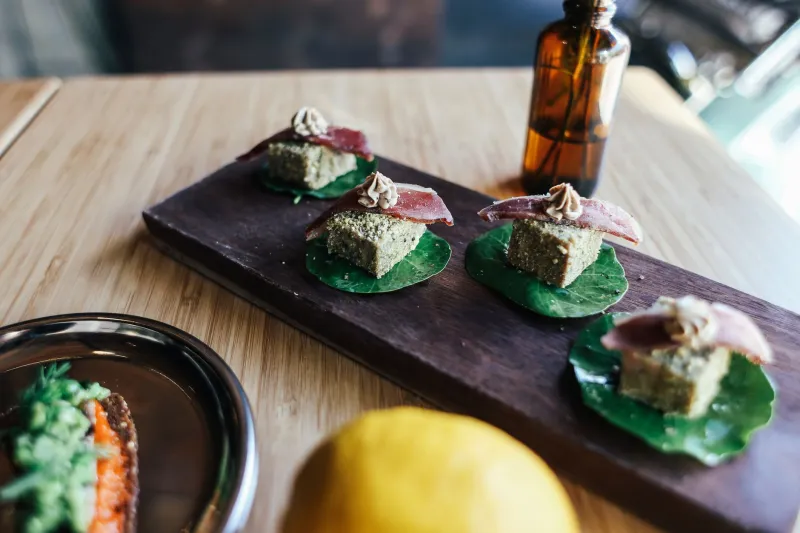
An amuse-bouche is technically a gift from the kitchen — a single, unrequested bite intended to delight the palate. It is also one bite. One. The word "amuse" comes from the French for "to entertain," which is appropriate because the amuse-bouche's primary function is to distract you from the fact that the actual courses haven't started yet.
A study of something — as in, "a study of beet" or "a study of duck" — means multiple small preparations of one ingredient, presented academically. You are not eating beet. You are studying beet. The beet is a subject, not a meal.
Put enough of these courses together and you have a tasting menu: seven to twelve courses, each the size of a thoughtful gesture, adding up to something that might, if you're lucky, approach the caloric content of a reasonable lunch.
Real People, Real Hunger: Dispatches from the Underfed
I am not alone in this experience. I spoke with a number of people who had recently dined at establishments in the fine dining tier, and their accounts were consistent in a way that suggests a pattern rather than individual misfortune.
A software engineer from Austin described a twelve-course tasting menu at a celebrated Texas restaurant. "Each course was genuinely beautiful," he said. "I took pictures of all of them. By course eight, I was also eating the bread basket with a level of focus that I think concerned the sommelier."
A marketing director from New York described her experience at a prix fixe dinner in the West Village. Three courses, $95 per person, not including wine. "The main course was a lamb chop," she said. "Singular. One lamb chop. Beautifully cooked, placed on a swoosh of white bean purée, with three small roasted carrots. I ate it in four bites. I counted. I had a granola bar in my bag that I ate on the subway home."
A retired teacher from Chicago told me about a birthday dinner at a rooftop restaurant downtown. "I spent $60 on a scallop," he said. "There were two of them. They were delicious. I also had a bowl of cereal when I got home at 11 PM, which is not how I usually spend my birthdays."
The Cost-Per-Calorie Calculation Nobody Wants to Do
Let's do the math that fine dining hopes you won't.
A typical fine dining entrée in a major American city currently runs between $38 and $65. A composed fish plate at that price point might contain, generously, a 4-ounce portion of protein, a tablespoon of sauce, and a small vegetable accompaniment. That's approximately 300 to 400 calories, depending on preparation.
At $45 for 350 calories, you are paying roughly 13 cents per calorie. A McDonald's Quarter Pounder with Cheese contains 520 calories and costs approximately $5.79 in most US markets, putting it at about 1.1 cents per calorie.
Fine dining costs, in raw caloric terms, approximately twelve times more per unit of energy than fast food. This is not an argument for fast food. This is an argument for acknowledging that you are paying primarily for an experience, an environment, a level of technique, and the particular pleasure of eating something prepared with genuine care and skill — and that the food itself, in terms of volume, is essentially a delivery mechanism for that experience rather than sustenance in any practical sense.
Order the bread. Eat the bread. Don't feel bad about the bread.
In Defense of Actually Feeding People
There is a counter-movement, quiet but real, happening in American dining. It is the return of the generous plate — not the grotesque excess of the Cheesecake Factory school of portion philosophy, but the honest, comfortable acknowledgment that people who have paid for dinner would like to feel fed at the end of it.
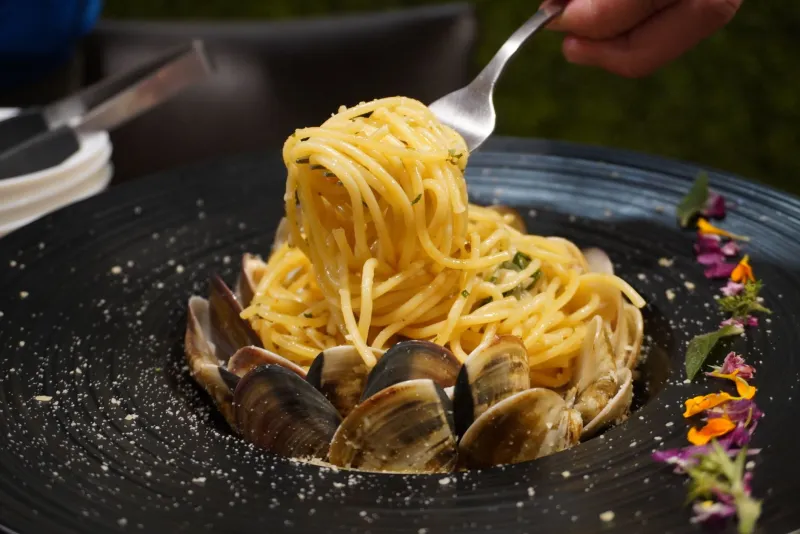
Some of the most acclaimed restaurants opening in American cities right now are making a point of serving food in quantities that correspond to what a human adult might actually want to eat. A whole roast chicken, served simply. A bowl of pasta that requires two hands to lift. A piece of fish that covers most of the plate. Not because these restaurants lack sophistication, but because they have arrived at a sophisticated conclusion: the best thing you can do for a diner is give them enough food.
The plate is not a canvas. It is a plate. The food is not art. It is dinner.
Feed people. Let them go home full. Everything else is negotiable.