Chef, Are You Okay? A Tour Through the Food Trends That Broke the Culinary Internet
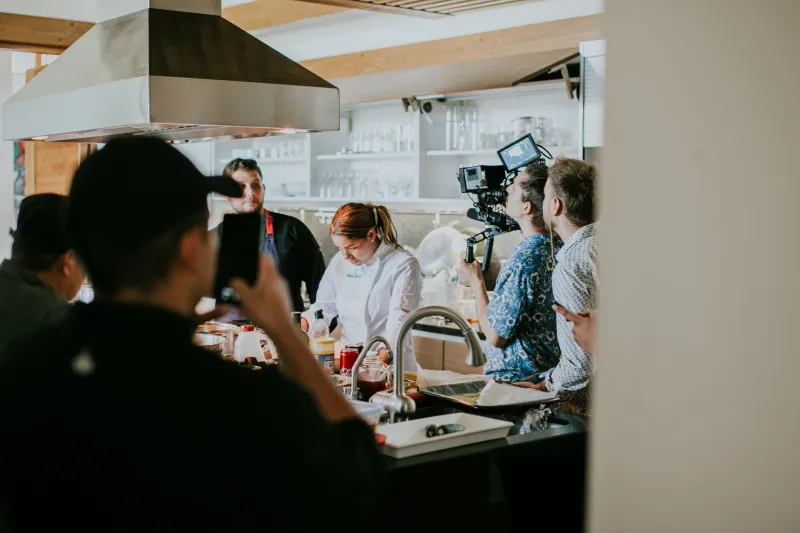
Somewhere right now, a trained culinary professional who spent four years in school and another decade working their way up through professional kitchens is watching a video of someone making pasta out of a banana. They are not okay. They have not been okay for a while.
The food internet has always had a complicated relationship with professional cooking. On one hand, social media has done genuinely remarkable things for food culture — it's made obscure regional cuisines accessible, launched small restaurants into national conversations, and given home cooks more resources than any previous generation. On the other hand, it has also given us feta pasta that broke grocery store supply chains, a bread made entirely of egg whites, and roughly four hundred variations on the smash burger that are all being presented as revolutionary.
We talked to chefs. We showed them things. Some of them needed a moment afterward.
Cloud Bread: The Trend That Started a Theological Debate
If you missed it, cloud bread is a recipe made from eggs, cream cheese, and cream of tartar — whipped into a foam and baked into a soft, pillowy round that resembles bread in the same way a cloud resembles a mattress. It's gluten-free, low-carb, and has the structural integrity of a strong opinion held by someone who hasn't eaten lunch.
When we described it to Marcus, a chef with twenty-two years in professional kitchens and a résumé that includes time at two Michelin-recognized restaurants, he went very quiet for a moment.
"It's not bread," he said finally. "I want to be clear about that. It is a baked egg foam. It is meringue with identity issues. I respect the people who need gluten-free options — genuinely, that matters. But calling it bread is like calling a canoe a submarine."
And yet. When pushed, Marcus admitted that the technique itself — stabilizing whipped egg whites with an acid and baking them — is a legitimate culinary process. "Chefs have been doing things like that for a hundred years," he said. "The problem isn't the method. The problem is that someone watched it on TikTok, made it in twelve minutes, and then told their followers it 'tastes just like bread.' It does not taste just like bread. Nothing tastes just like bread except bread."
Verdict from the kitchen: Technically defensible. Spiritually confused.
Deconstructed Everything: A Crime Scene Dressed as Fine Dining
At some point in the last decade, a decision was made — somewhere, by someone — that the highest form of culinary expression was to take a dish that worked perfectly well as a dish and scatter its components across a plate as though they'd been dropped from a modest height.
Deconstructed cheesecake. Deconstructed nachos. Deconstructed tacos. The deconstructed Caesar salad, which is simply the ingredients of a Caesar salad arranged in a way that makes it harder to eat.
Chef Diane, who runs a well-regarded farm-to-table restaurant in the Pacific Northwest, has thoughts.
"Deconstruction as a concept has real merit," she told us, in the measured tone of someone who has clearly rehearsed this. "When Ferran Adrià was doing it at elBulli, it was about challenging your perception of flavor and texture. You'd eat something that looked like a dessert and tasted savory, and it genuinely made you think differently about food. That's exciting. That's art."
She paused.
"What is not that," she continued, "is putting the components of a chicken pot pie in three separate ramekins and charging thirty-eight dollars for it. That's not deconstruction. That's just not finishing the dish."
The deconstructed trend has cooled somewhat — restaurants that were serving "deconstructed" everything in 2018 have largely moved on — but its ghost haunts menus across America in the form of dishes described as "components" and "elements" that are really just things placed near each other on a very large plate.
The Birria Taco: When a Trend Actually Earns It
Not every viral food moment deserves skepticism, and the chefs we spoke to were consistent on at least one point: the birria taco boom was legitimate.
Birria, the slow-braised Mexican stew traditionally made with goat or beef, has existed for centuries. Its emergence as a social media phenomenon — specifically the consommé-dipped, cheese-crusted, Instagram-red taco version that went viral around 2019 — is one of those cases where the internet actually did something right.
"That trend put real money into Mexican-owned restaurants and brought attention to a dish that deserved it," said Chef Roberto, who grew up eating birria at family gatherings in Jalisco and now operates a taqueria in Chicago. "My grandmother made birria. Her grandmother made birria. And now people in Maine know what it is. I'll take that."
The consensus among chefs: when a trend amplifies a real culinary tradition rather than inventing a gimmick, it earns its moment. The birria taco passes. The "deconstructed" version of a birria taco, should it ever exist, does not.
Butter Boards: A Genuine Point of Contention
In the fall of 2022, someone spread softened butter across a wooden board, topped it with herbs and honey and various garnishes, and filmed it. The internet lost its mind. Butter boards were everywhere within seventy-two hours.
Chef responses were, fascinatingly, split.
The opposition argued that a butter board is simply butter served in an inconvenient way — that the board format makes portioning awkward, creates a communal dipping situation that raises hygiene questions, and that the whole thing is fundamentally a serving vessel trend masquerading as a recipe.
The defense, surprisingly robust, pointed out that compound butter has been a staple of professional kitchens forever, and that making it accessible and visually appealing for home entertaining is genuinely useful. "If a butter board gets someone excited about cooking for their friends," one chef told us, "I'm not going to be the person who ruins that."
This might be the most generous thing a chef said to us during this entire project.
The Bigger Question: Innovation vs. Content
The through-line in every conversation we had with culinary professionals was a distinction they kept returning to: is this trend about food, or is it about content?
Cloud bread exists primarily because it photographs beautifully and can be made in a home kitchen without specialized equipment. Butter boards exist because they film well. Deconstructed dishes exist because they look impressive on a plate even when they're less functional than the assembled version.
None of that is inherently evil. Aesthetics matter in food. Accessibility matters. But there's a difference between a trend that teaches people something real about flavor, technique, or culinary culture — and a trend that exists to generate thirty seconds of watchable video.
The chefs we spoke to are not anti-innovation. They're anti-pretense. They'll embrace a genuinely new idea with the same enthusiasm as anyone else. What they won't do — what they cannot do, professionally or emotionally — is pretend that egg foam is bread.
And honestly? Neither can we.